
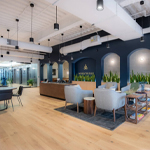
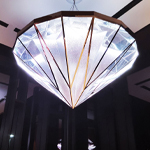


This is one of our biggest (and most exciting) projects, and it’s happening in the heart of the greatest city in the world– New York. Twelve months ago, Ideoli signed on to be a part of a huge construction project in New York City: helping to create the new American Girl flagship store at 75 Rockefeller Plaza. We are beyond proud to have been an instrumental part of a project of this magnitude in the greatest city in the world, which also happens to be where Ideoli was founded. Since 1986, the American Girl brand has been charming girls of all ages (and their moms) with its customized dolls, accessories, books, and more. Its retail stores are just as iconic, letting girls explore all the brand’s most popular items, from the historical and contemporary dolls and award-winning books to on-site restaurants and doll salons. The brand-new, state-of-the art store in New York City offers shoppers even more, including the AG Signature Studio, where girls can choose their own doll-sized and girl-sized fashions and accessories; private party rooms; a salon just for girls; a media studio and much, much more. From the very beginning, American Girl sought out the best manufacturers, designers and architects to help them make their vision a reality. Engaged by the company’s distribution partner and architect, Ideoli has been involved every step of the way, from early design conception to precise renderings and final installation of a beautiful piece that adds to the magic of the 40,000-square-foot, two-level building that boasts high ceilings and a modern, open look. Working hand in hand with designers, engineers and architects, Ideoli and its partners labored nonstop and are proud of all they have helped to accomplish. Through innovative collaboration and unparalleled teamwork, Ideoli provided the resources, strategies and skills that were needed to ensure the new building was completed in a timely manner that exceeded everyone’s expectations. Now completed, the new American Girl flagship store is a magnificent sight at 75 Rockefeller Plaza that is sure to take the breath away from all who enter it. But don’t just take our word for it. The next time you’re in New York, head over to the landmark location, look up, and prepare to be ‘wowed.’ Tell them Ideoli sent you. Making a vision a reality. It’s what Ideoli is all about!

Ideoli’s co-founders George and Chris spend a great deal of their time travelling the globe. It’s something they enjoy immensely. And why not? It’s the perfect way to see the world, connect with partners while overseeing production runs and client installations—and get inspired and invigorated by the country and the people around them. Situated mostly on the right bank of the Rhine River, Düsseldorf is the capital of the state of North Rhine-Westphalia and is one of the busiest metropolitan cities in Germany. Originally established in 1135, the city has gone through many renaissances. Although many of the city’s oldest buildings were destroyed during WWII bombings, the city and its people persevered and many new structures were built. Today, Düsseldorf is a prosperous metropolis, with its avant-garde architecture, thriving shopping districts, myriad museums and theaters, and flourishing bar, pub and restaurant scene. Königsallee (Kö for short) is one of the city’s most elegant and well-known streets lined with shops that range from the world’s top designers to eclectic boutiques to cozy street cafes. Other notable landmarks include Lambertus Church, with its crooked tower; Jägerhof and Benrath Castles; and Feldhofer Cave, where remains of Neanderthal man were discovered in 1856. Düsseldorf’s Old Town is referred to as “the longest bar in the world,” since there is no shortage of rustic pubs that offer Alt Beer, the local top-fermented beer specialty. Throughout the year, the city hosts numerous festivals held along the Rhine, including a celebration of Japanese culture, a fair in July and the famous Christmas market during Advent season. For Ideoli’s globe-trotting co-founders, spending time in Düsseldorf is an excellent way to get invigorated by Germany’s cultural cuisine. George and Chris believe a visit to the city is not complete without experiencing these five favorites: 1. Wurst With more than 1500 types of Wurst (or sausage) made in Germany, you may never have the same type twice. Sold at street stalls throughout the city, the most popular kinds of Wurst are Bratwurst, fried sausage made of ground pork and spices; Wiener (Viennese), which is smoked and then boiled; and Blutwurst and Schwarzwurst, which are blood sausages. 2. Himmel un aad In English, the name of this traditional dish—blood sausage, onions and apple-mashed potatoes—means heaven and earth. Most agree it’s aptly named. 3. Sauerbraten A well-known and popular dish that’s regarded as one of the country’s national dishes, Sauerbraten features picked roast beef and stewed apples. Its distinct flavor is a result of days-long marinating in vinegar and other spices. 4. Halver Hahn A simple, yet delicious dish that consists of dark rye bread, cheese and mustard. The English translation of the meal’s name, “one half of a cock,” may make you blush—or smirk! 5. Alt Beer This is the drink that Düsseldorf is known for and why the Old Town is referred to as “the longest bar in the world.” Step into any pub and bar throughout the city for a taste of this signature brew, a dark beer with a pleasant, mellow flavor. Cofounders George and Chris agree that visiting Düsseldorf, Germany, and getting invigorated by its food and drink is the perfect way to build upon the key relationships they have with Ideoli’s partners and clients.

For Ideoli co-founders George and Chris, traveling the world is one of the most exciting parts of their roles. As they roam from city to city, and country to country, establishing connections with partners while overseeing production runs and client installations, they can’t help but get invigorated by the people they meet and the cultures they get to explore. A recent stop for them was Jakarta, Indonesia, and it proved to be one of the favorite places they’ve visited to date. Located on the Northwest coast of Java Island, Jakarta got independence from the Dutch East India Company in 1945. Formerly known as Batavia or Djakarta, today it is Indonesia’s capital and its largest city with a population of more than 23 million people. It is the world’s largest Muslim country. A thriving metropolis that is a leader in trade, finance and education, the city is also a popular spot for Asian sports, hosting the 1962 Asian Games and the 2007 Asian Cup. Although the city is hot and humid—Its year-round climate ranges between 75F and 93F—the sea winds offer a welcome respite from the heat. Jakarta seamlessly balances western architecture and traditional Indonesian cultures, often called Betawi cultures. Among the long-standing customs you’ll find in the city are the Betawi language, which is a creole language that combines many languages; Tanjidor, which are traditional music groups; Gambang Kromong, a traditional musical art; and various dance/drama/performing art forms such as Yapong, Betawi Mask Dance, Sirih Kuning Dance, Ondel-ondel and others. You’ll find many Kebaya, Joglo and Gudang homes, all traditional-style Betawi houses. Of course, Jakarta’s food is one of its most treasured traditions. Its cuisine is influenced by China, India and European countries, and Ideoli cofounders found themselves getting invigorated by the city’s unique cultural cuisine. Here is their list of the top 5 things to eat and drink in Jakarta: 1. Bakso This savory meatball soup is a very popular dish. Usually made with beef meatballs, noodles and vegetables; chicken or fish meatballs are also available options. You’ll find this throughout the city, at street vendors, local restaurants and five-star hotels. 2. Bubur Ayam (Chicken Congee) A traditional meal to start your day, this breakfast rice congee is served with shredded chicken and condiments such as soy sauce, fried shallots, beans and crackers. 3. Sate Padang A popular choice for a late-night snack or supper, this is a classic dish that has long been enjoyed by the people of Jakarta as well as all of Indonesia. Usually a beef-based dish, it can also be made of chicken or lamb. The meat is first boiled with herbs and spices then diced and skewered for grilling. The left over stock is the secret ingredient that makes Sate Padang’s dipping gravy so delicious. 4. Nasi Tupeng An impressive dish meant to be shared, Nasi Tupeng is officially recognized as Indonesia’s national dish and one that is enjoyed at special events and occasions. Yellow uduk rice is shaped into a cone and surrounded by a variety of colorful side dishes. 5. Bir Pletok Although its name makes you think ‘beer,’ this traditional Betawi drink, which is made from ginger, lemongrass, cardamom, cinnamon, sappan wood and sugar, is totally nonalcoholic. It is a drink reserved for special occasions, often served at weddings and funerals. As they continue to visit cities and countries around the globe, George and Chris are continually inspired and invigorated by the people they meet and the unique cuisines and cultures they get to discover. Connecting with Ideoli’s partners and clients offers them unlimited opportunities to strengthen and build relationships.

Throughout the month, our employees are traveling back and forth from places all over the world. While Ideoli is working hard, we’re also making it a point to try and see all that we can. This includes indulging in some culture, and that means trying all types of new foods! Here’s our top 5 things to eat and drink in Beijing, China: 1. Tanghulu (Toffee Apple) Be prepared for lots and lots of sugar in this Chinese version of a toffee apple. You’ll find them at street vendors around Houhai and throughout the city. Just be warned that although the sugar coating makes the apples look nice and shiny, the fruit inside may not be as fresh as you hope! 2. Egg Tarts Popular in Hong Kong, egg tarts have now become quite common in Beijing. The smooth and crispy pastries can be found in many local restaurants as well in convenience stores where you can pick up preheated tarts for breakfast on-the-go. 3. Hot Pot Head to a hotpot restaurant with friends and you get the best of both worlds: you’re served all the ingredients but you get to cook your own meal. A pot of broth is brought to your table and you order any combination of meats, vegetables and sauces. Once the broth boils, you ‘cook’ the ingredients. At some venues, you are able to create your own bowl of dipping sauce. 4. Gangou Potatoes A popular meal in the colder months, this literally means ‘dry pot potato slices.’ The dish features slices of potato, crispy pork and chilies that are served in a hot pot that sits on an open flame. Underneath the meat and potatoes is a delicious layer of sliced, caramelized onions-the perfect ending to a perfect meal. 5. Tea For more than one thousand years, tea has been a mainstay of Chinese culture. Throughout Beijing, you’ll find tea houses where you can sample a variety of teas—from green to black to red to flower—and you’ll have the opportunity to socialize with friends, relax and experience a true taste of Chinese culture. For co-founders George and Chris, visiting Beijing, China, and getting invigorated by its food and drink is the perfect way to build upon the key relationships they have with Ideoli partners and clients.

Ideoli cofounders George and Chris agree that nothing compares to traveling around the globe. It’s a chance to connect one-on-one with our partners and clients and it gives them the opportunity to get inspired and invigorated by the culture, people and cuisine of the country they are visiting. Shanghai is China’s largest city that seamlessly blends east and west cultures. The city’s storied history—which dates back over 6,000 years—is celebrated through long-standing traditions and indelible architecture. The Huangpu River helped develop Shanghai’s reputation as a major world port thousands of years ago. From the Ming and Qing Dynasties to its economic development pre-WWII to its years of closed-off communist rule, Shanghai has reinvented itself time and again. Today, it is one of the top economic centers of the world. The Old City of Shanghai offers visitors a glimpse of what once was while 1920s and 30s European Art Decoarchitecture is evident throughout the streets of The Bund. Early in the morning, you’ll spot elderly residents practicing Tai chi en masse in the city’s parks and the People’s Square, and in the evening, groups dancing together outdoors are a familiar sight. Working hard is a given among millennials, but so is playing hard. Young Shanghai residents revel in the city’s vibrant nightlife that includes bars and nightclubs, especially those on Julu, Xintiandi and Hengshan Road. A favorite pastime of George and Chris is to sample Shanghai’s food and drink, whether it’s spicy delicacies from a local street vendor, a four-course meal prepared by a three-Michelin-star chef or a regional beer or cocktail. The perfect way for Ideoli’s cofounders to get invigorated by China is through Shanghai’s cultural cuisine. Here is a list of their top 5 things to eat and drink there: 1. Scallion Pancakes Be prepared to start your day by spending time in line at a street vendor for this Shanghai breakfast staple, but also be prepared to be wowed. Flaky, buttery, crispy fried pancakes are stuffed to perfection with scallion and pork. 2. Noodles There is no shortage of noodles in Shanghai, where they are served fried, in soups, and topped with everything from scallion oil to shrimp or eel. From street vendors, enjoy scallion oil noodles (cong you ban mian) that are thin, hand-pulled and dressed with scallion oil and soy sauce and toppings. At finer restaurants, these noodles are often served at the end of a multi-course meal. 3. Dumplings Found in a variety of delectable forms, dumplings are another street food favorite. Xiao long bao, dumplings with a hot liquid center and sheng jian bao, dumplings stuffed with pork that are fried on the bottom, are both quite popular. At dim sum restaurants, you’ll find pot stickers and steamed dumplings on the menu. 4. Roast Duck With its crispy skin and tender meat, duck in Shanghai is roasted in an open fire (Cantonese style). Prepared the same way as Beijing roast duck, the meat is served with a sweet sauce, scallions and steamed pancakes. 5. Sinkiang Black Beer Similar in taste to an American dark lager, Sinkiang Black Beer (also known as Xinjiang Black Beer) originated in northwest China. Strong-flavored, it has the scent of nuts yet also a hint of brown sugar. Complements the cuisine of Xinjiang, China’s western most province, that is found throughout Shanghai By traveling the world, George and Chris are constantly inspired and invigorated by the culture and cuisine of the cities they visit. From sampling the local food and drink to connecting with Ideoli’s partners and clients, it offers them unlimited opportunities to strengthen and build relationships.

Ideoli’s cofounders George and Chris spend a great deal of their time travelling around the world to connect with our partners and clients—and they don’t mind it a bit. How else would they be able to do what they enjoy most: get inspired and invigorated by the country and the people around them? Guadalajara is Mexico’s second largest city and the capital of the state of Jalisco. The home of sombreros, rodeos, mariachi music and tequila, it’s one of George and Chris’ favorite stops as they travel the globe. First settled by the Spanish in 1532, the city has a rich history and diverse culture. Its colonial past is evident in the Centro Histórico (Historic Centre), which is surrounded by fountains, gazebos, churches and markets. Its many historic monuments and statues remind all of those who fought proudly for Mexico’s independence. Distinct regions, from the lively neighborhood of Zona Rosa to the art-filled town of Tlaquepaque to the working-class district of Tonalá, add to Guadalajara’s vibrancy. The city offers visitors everything they need in a destination, boasting world-class museums, gorgeous colonial architecture and mouth-watering cuisine. Which brings us to what George and Chris love most about traveling…exploring different cultures through food and drinks. For Ideoli’s globe-trotting cofounder’s, there is no better place than Guadalajara to get invigorated by Mexico’s cultural cuisine. For them, a visit to one of their favorite cities is not complete without experiencing these five favorites: 1. Pozole Rojo A popular meal choice when going out to dinner in Guadalajara, Pozole Rojo, is one of George’s favorite. The base, either a broth, stew or soup, features pork, lettuce and radish. A typical dish found all over Mexico, in Guadalajara, this meal is combined with the flavors of traditional la cocina tapatía (the cuisine of Jalisco). 2. Torta Ahogada Invented in Guadalajara in the early 1900s, the Torta Ahogada is a sandwich stuffed with pork and soaked in salsa. Made from the very hot chile de arbol vinegar, cumin, black pepper and other spices, the salsa is spicy but it’s complemented by the addition of a mild, tomato-based sauce. The pork filling is marinated in garlic and citrus, cooked slowly, and then fried up until crisp. From fancy restaurants to neighborhood bars, this long-standing favorite local sandwich can be found throughout the city. 3. Carne en su jugo This dish literally translates to “meat in its juices.” It is a favorite of the people of Guadalajara and a favorite of George and Chris. Small pieces of flank steak are cooked in their juices, then mixed with whole beans and crispy, crumbled bacon. Corn tortillas, onion and coriander are the sides of choice that accompany this traditional meal. 4. Bionico For Chris’ sweet tooth, Bionico is a must have when he’s in Guadalajara. This healthy, classic, parfait-like treat features sliced fruits (apples, cantaloupe, strawberries and bananas) and yogurt, topped off with a choice of granola, raisins, coconut, sprinkles or cherries. It’s a great way to stay cool when visiting Mexico in the summer. 5. Tequila No trip to Guadalajara is complete without one (or several) shots of tequila. In the birthplace of tequila itself it would be a sin against the culture not to and Chris and George are only happy to oblige. Lime and salt please! They also enjoy sharing a cazuela, a local cocktail of citrus fruit, tequila and soda that’s served communal style in a clay pot. Before you sip, though, don’t forget to utter the traditional toast: “Arriba. Abajo. Al centro. Adentro.” (Up. Down. Center. Inside.) Traveling the globe allows George and Chris to get inspired and be invigorated by the culture and traditions of the places they visit. They never tire of sampling the local food and drink and relish the unlimited opportunities to socialize with their partners and strengthen and build relationships

The process of invigorating a space begins on the drawing board of a designer at Ideoli. In collaboration with production engineers and installation managers, we source raw materials and select the production facility after a personal visit from a member of our design team. Prototypes are produce and carefully examined by the designer, as well as production and installation managers, ensuring they are flawless. Production then begins in a modern, clean, efficient factory with quality control protocols in place. Ideoli implements quality control procedures throughout the manufacturing process. Statistical Process Control (SPC), a system of production metrics giving early warnings to avoid flaws is in place. The doctrine of Six Sigma is integrated with Statistical Process Control in all production facilities. The intended result of Six Sigma is that quality assurance will gain customer satisfaction, customer loyalty, repeat business, improved safety, reduced liability risk and improved market position. Ideoli has a philosophy of quality control that is pervasive in every aspect of manufacturing undertaken for custom designs and installations. A quality installation begins with an intricate knowledge of sourcing raw materials in an environmentally responsible manner and safely shipping them to the manufacturing facility. Every factory, on every continent, has the same quality metrics in place to deliver a flawless product. The entire staff of the factory, working in a clean, neat environment, is focused on quality, ensuring that a product, reflective of the quality philosophy, is produced. Quality control metrics, with hands-on oversight by Ideoli, brings everyone together. The entire workforce of the plant working toward meeting quality goals lifts morale, produces diligence, letting ingenuity shine. Randomly selected pieces at various stages of the build, from the raw materials to the shipping cartons, are screened for any flaws. Issues caught early can be quickly addressed, saving time and money-essential elements of delivering a custom project. Auxiliary items, shipping supplies and packing materials are all required to meet the same quality standards as the product itself. The customized products arrive at the installation in the same pristine condition as when they were packed at the factory. Packing a product for shipment is not a small detail; it is a continuation of the quality process. Every facet of an installation arrives at the job site unblemished. Ideoli takes immense pride in having all jobs completed to surpass expectations. When quality is controlled from the selection of raw materials to the final bolt, Ideoli can deliver a custom-designed space without flaws or durability issues. Quality control is not an expense; it is a cost saver. Quality control ensures that everything that is manufactured is produced in an efficient, environmentally responsible way without waste. Quality benefits everyone involved in any project, from the factory employees to the satisfied customer. Invigorating your space can be accomplished only with strict quality control metrics instituted by Ideoli. Quality Control from start to finish is essential for an on-time, on-budget installation

Everyone intuitively knows that lighting affects mood. You feel better on a bright day filled with sunshine. You are more likely to feel a lack of energy on a cloudy gloomy day. School rooms and office spaces have traditionally been lit by bright flourescent lights to mimic a bright sunny day increasing attentiveness. Turn on a 1950’s love story movie and the phrase romantic lighting is sure to come up. Your sleep pattern is dictated by the natural pattern of day and night, referred to as body clock and scientifically as circadian rhythm. The intrinsic knowledge that lighting affects human behavior has now been confirmed in the age of technology by scientific research and studied by the designers of Ideoli Group. The subject of workplace lighting was considered by Dr. Mirjam Muench and his associates for an article on productivity. They tested a work place with daylight (without giving the subjects window views) against a workplace with artificial light. The conclusion of their research showed that those in the artificial lighting became less alert, had mood changes with less visual comfort by the day’s end. Whereas, the subjects who worked in natural light were more alert as evening approached, had less mood swings during the day without discernable eye strain. Professor John S. Dyson of Cornell, whose area of expertise includes eating behaviors tested his theory that lighting affects how much you eat. Two groups were giving the same menu in the same eating space with different lighting. One group was subjected to bright lights, the other to more subdued lighting. Those that ate in the subdued lighting made healthier food choices, ate fewer calories and enjoyed their food more than their counterparts in the brightly lit dining area. These considerations are essential in a space design at Ideoli. Supermarkets have long known the value of lighting in appealing to consumers. The meat always looks redder in the butcher case, the lettuce always looks greener in the produce case. Not because of the brightness of the light, it is the warmth of the light. Artificial lighting has a measurement known as CCT, Correlated Color Temperature, a scientific way to measure the light spectrum produced that are affecting the colors that are perceived. An example that everyone can relate to is the term on a light bulb box, Cool White, which is describing the CCT of the light output of that bulb. A Cool White light bulb in your bathroom will display a different you in the morning than a bulb at the lower end of the CCT spectrum. When considering the use of a space, lighting is an essential element. Your bedroom should have a softer light with a lower CCT to allow your circadian clock to wind down. A home office used during day light hours, brighter with a higher CCT number to keep you attentive. There really is different lighting for different areas of your home. In your business the right lighting choices will improve your bottom line. When it’s time for Ideoli to invigorate your work space, hospitality, retail or office, lighting is an essential element of the design. The professional space designers at Ideoli are well versed in the importance and significance of the lighting needed to bring every space to its full potential. Knowing, the brightness, warmth, and impact of each lighting choice is a crucial part of any redesign. Lighting for your customers and staff are calculated to meet all the requirements of your environment. Lighting is not an afterthought for the designers of Ideoli, it is an integrated component that enhances the entire project. Is it time to invigorate your space? Let Ideoli show you the light.

LED lighting offers exciting opportunities to improve commercial environments in a variety of ways. From overall cost savings to energy savings to greater design flexibility, LEDs have a wide range of benefits over other types of lights like incandescent and fluorescent. Yet many myths exist regarding LEDs, and we’re here to debunk those so you know what to expect from this type of versatile lighting technology Myth #1: They’re too expensive. Although the initial purchase price of LEDs can be more expensive than other light sources, the cost is often much more attractive upon closer examination. First of all, some energy utilities offer rebates for customers that switch to LED lighting. You can check this site to see if your state offers any incentives for specific lighting applications. Next, as LEDs gain more market penetration and technologies improve, the prices will continue to come down. Lastly, the total lifetime cost tends to significantly favor LEDs. This technology is generally more energy efficient than other types, thereby reducing electricity costs. Plus, a single bulb can last over 10 years, whereas an incandescent light source might only last a year or so. As a result, you save on replacement costs, including the maintenance fees for having to replace hard-to access bulbs and fixtures in commercial spaces. Myth #2: Changing to LED will not affect electric bills. As indicated above, LEDs help you save money on your electric bill, both because of rebates from utilities as well as from using less kilowatt hours of energy. In fact, operating at a lower wattage enables LEDs to save you around 75-80% on energy costs compared to traditional incandescent light sources. Myth #3: They’re not bright enough. This myth is fueled in part because light bulbs are often rated in watts. A 12W LED might operate at the same brightness as a 60W incandescent, but someone might see the higher number associated with incandescents and assume that means it’s brighter. However, watts are really a measurement of the rate of power usage. Since LEDs are more efficient, they operate at lower wattage. Instead, buyers should really be looking at lumens as a measure of brightness. Both 100W incandescent light bulbs and a 16W LED bulb could have the same output of 1,600 lumens. Meanwhile, a 60W LED bulb is bright enough to blind you. Myth #4: All LEDs are the same. Businesses often make lighting purchases based on price, thinking that lighting is a commodity. However, lights from different brands can vary in the quality of their performance, and they can have different warranties. Especially for a category on the cutting edge like LEDs, it’s important to consider the broader spectrum of quality, considering that some brands invest more than others in research, manufacturing and testing to ensure their products last longer, maintain luminosity, display the intended color, and have other factors that serve as differentiators. Myth #5: LEDs last forever. While the LED myths we’re debunking should inspire optimism in using these bulbs, it’s important to keep expectations realistic. With that in mind, know that LEDs do not last forever, though it might seem like they do compared to other bulbs. They can last up to around 50,000 hours, meaning an LED bulb used for 10 hours per day, every day, would last nearly 14 years. That being said, it does not mean that the quality of light will be the same after this period of time. Myth #6: They’re heatless To properly set expectations, it’s also important to note that LEDs are not heatless, but they might seem like it in comparison to other bulbs. Most of the energy from incandescents escapes as heat rather than light, which is why they feel so much hotter than LEDs and are less efficient. Yet LEDs still produce some warmth, and the diodes and internal components of an LED light are very hot. Good LED product manufacturers dissipate this heat better than others. Ideoli’s foundation as a company is rooted in LED technology. The founders, George Stroumboulis and Chris Hartswick, have been part of LED lighting startups prior to Ideoli and have been involved with the design, development, manufacturing and sale of some of the industry’s leading LED products. As you can see with these debunked myths, LEDs offer clear advantages over other types of light bulbs. By knowing the facts, it’s easier to choose the lighting source that best suits the needs of your business. Ideoli is well positioned to help you make those lighting choices.

When it comes to industry-leading products, it’s not just what’s on the inside that matters, but also what’s on the outside. Fair or not, consumers do “judge a book by its cover,” so it’s important for brands in all types of sectors to develop great packaging from both a functionality and design perspective. Having great packaging makes a direct impact on your sales. In fact, a study by Nielsen found that “choosing the right design direction [for packaging] can increase forecasted product sales by 5.5%.” In some sectors, packaging can be a particularly important way to attract customers. Although Ideoli does not operate in the grocery space, we learn a lot from the sector, as grocery items’ packaging can make a very large impact. “Packaging on a supermarket shelf typically has less than three seconds to grab a consumer’s attention. Additionally, more than 70 per cent of purchasing decisions are made at the shelf,” notes Velda Croot, who served as a business development director at brand design firm JDO, as quoted in an article in The Drum. So choosing the right packaging differentiates your brand from others and creates a strong first impression before the customer even sees or tries the finished product. “Packaging is absolutely fundamental, and I would say the most important element in the customer purchasing journey, and that’s whether you’re a leading brand or a challenger brand…if it doesn’t do its job on shelf then you’re wasting your time,” adds Simon Preece head of client partnerships at brand design firm Elmwood, as quoted in the aforementioned article in The Drum. Product packaging is an integral part of the overall customer experience and directly appeals to consumers’ emotions. Think of the design aesthetics in tech stores like Apple and how the packaging matches that sleek, ultra-modern feel. Or look at how certain jewelry stores have iconic packaging that connects customers to feelings of luxury and exclusivity. In other words, packaging plays an important role in developing your brand and advertising your products. And for those familiar with your brand, it can help consumers quickly recognize your offerings.

Despite being a startup, we have been able to stretch out across the globe to areas such as New York, Los Angeles, Athens, Shanghai, Ho Chi Minh City and more. Operating across multiple time zones can be tricky, however, as we need to we stay connected with associates, advisors, partners and clients without always being in the same location. However, by using the latest technology and staying true to our foundational principles including forging long-term relationships, we are able to stay connected as Ideoli expands international. To stay connected when running a multi-national company, consider these five areas: 1. Constant Communication If you’re not in the same location as someone, it can be easy to let communication decline over time. However, it’s crucial to go against this tendency and instead, find ways to maintain constant communication. Today’s digitally-enabled world makes it easier than ever to communicate with anyone, anywhere, anytime. This communication does not have to be lengthy, but we find that even just texting clients to say hi or getting a quick project status update over the phone with project managers is important to make sure that the business is moving forward successfully on all fronts. 2. Digital Face Time Seeing is believing, so sometimes communication needs to take the form of digital face time. Whether it’s using video chat platforms like Google Hangouts, FaceTime or Skype, or just sending a photo or video of things like product prototypes, digital face time can help close the physical divide between people working in different locations. 3. Physical Face Time While digital face time helps us stay connected, it’s also important to not discount real face-to-face meetings. At Ideoli, we plan business trips with the goal of maximizing in-person interactions so that we can more fully-connect with those important to our work. Sometimes that means planning multi-purpose trips, such as traveling to a client’s site to oversee an installation, followed by meeting with a local supplier and potential interviews for new partners. 4. Project Management Tools To keep everything organized and to maintain a solid communication flow even when associates are far away from each other, we rely on project management tools as our lifeline to the business. Doing so helps us ensure that everyone is on the same page. While we want to maintain constant communication, we also don’t want to start falling into unnecessary communication due to associates duplicating work or missing deadlines because not everyone has the right information. And when traveling, tools like Asana, Zoho and Salesforce make it easy to stay up-to-date, rather than having to dig through emails to find out what’s going on. 5. Targeted Time Zone Shifts Lastly, Ideoli finds that having constant coverage across international time zones helps us stay connected, have a consistent flow of communication around the world and allows for a truly integrated organization. Rather than trying to serve all our clients globally only during U.S. business hours, we have associates and partners in multiple time zones that can help us provide client coverage around the clock. That way, the company as a whole does not miss out on important opportunities or issues due to time differences Running a successful multi-national company requires staying connected, and Ideoli is always on the front lines of using technology to make this possible.

The rise of e-commerce has been a challenge for brick-and-mortar retailers, and many face strained budgets. As a result, retailers are turning to the practice of value engineering, which involves analyzing the value of each of the elements within a retail space—ranging from the type of flooring to the lighting—to see whether the elements provide enough functionality to make the cost worth it. While value engineering is a smart practice to optimize budgets, retailers should understand that there are pros and cons. Being aware of the downsides can help them avoid these pitfalls and ensure that their spaces look great and provide quality functionality without breaking the bank. Value engineering includes the following pros and cons for retailers: Pro: Increased Cost Savings By analyzing whether elements provide enough benefit to justify the cost, then retailers can eliminate unnecessary expenses. For example, if a store needs to put in new flooring, it might find that laminate wood looks just as nice as hardwood, while having a much lower price and easier maintenance. Con: Overlooked Expenses On the other hand, value engineering can cause stores to overlook certain expenses. An incandescent light bulb might provide the same luminosity as an LED bulb for less cost, which would indicate that the incandescent is a better value. However, it’s important to consider the larger picture of costs, such as the maintenance fees for replacing hard-to-access bulbs, as incandescents might only last a year, while LEDs can last over a decade. Pro: Enhanced Functionality Since value engineering is all about maximizing the right ratio between functionality and cost, that means that sometimes instead of focusing on minimizing cost, retailers can choose elements that have such high functionality that it justifies the cost, and thus provides great value. For example, multi-purpose furniture like adjustable desks that can be used in an office or to display merchandise provide a lot of functionality and perhaps more value than other desks. Con: Risk of Diminished Customer and Employee Experience While some elements may not seem to provide much value on the surface, it’s important to consider how all elements affect customer and employee experience. If a brand opens a new store that uses the lowest-cost materials without regard for where they were sourced from, then that could push away customers and employees who prefer retailers that use and promote sustainable materials. Pro: An Eye for Optimization Value engineering optimizes the design and buildout of retail environments, so by getting into that mindset, retailers can look to optimize other areas of the company, ranging from how they staff their business to how they spend budget on advertising campaigns. The pros tend to outweigh the cons for using value engineering in the retail industry, and by recognizing the downsides and working with trusted partners like Ideoli, retailers get even more value out of value engineering.